
Day 2: Leaving Ushuaia
We left Ushuaia at half past six in the evening. The wind came down off the mountains hard and mean, and it found us before we were well clear of the dock. We raised sail into it, the boat heeled over, and the lasagna Chef had made for the passage slid off the counter and was gone. No one said much about it. The sea collects on its debts early, and a lasagna is a small price.
By eight we were underway and the watches were set. Mine was four to eight, with Chef and one of my fellow passengers. It is a good watch, maybe the best, because a man on it sees the day come and sees it go, and in between he sleeps. The crossing would take three days, or four, or five. The Drake decides that, not us.
All night we ran down the Beagle Channel, and at first light the dolphins came. They came the way dolphins always do, with no purpose but joy. They rolled through the waves and crossed under our bow, and they rode the wake behind us like children who had found a hill to slide down. Then the channel opened and we turned south into the Drake Passage, the widest and loneliest water in the world.
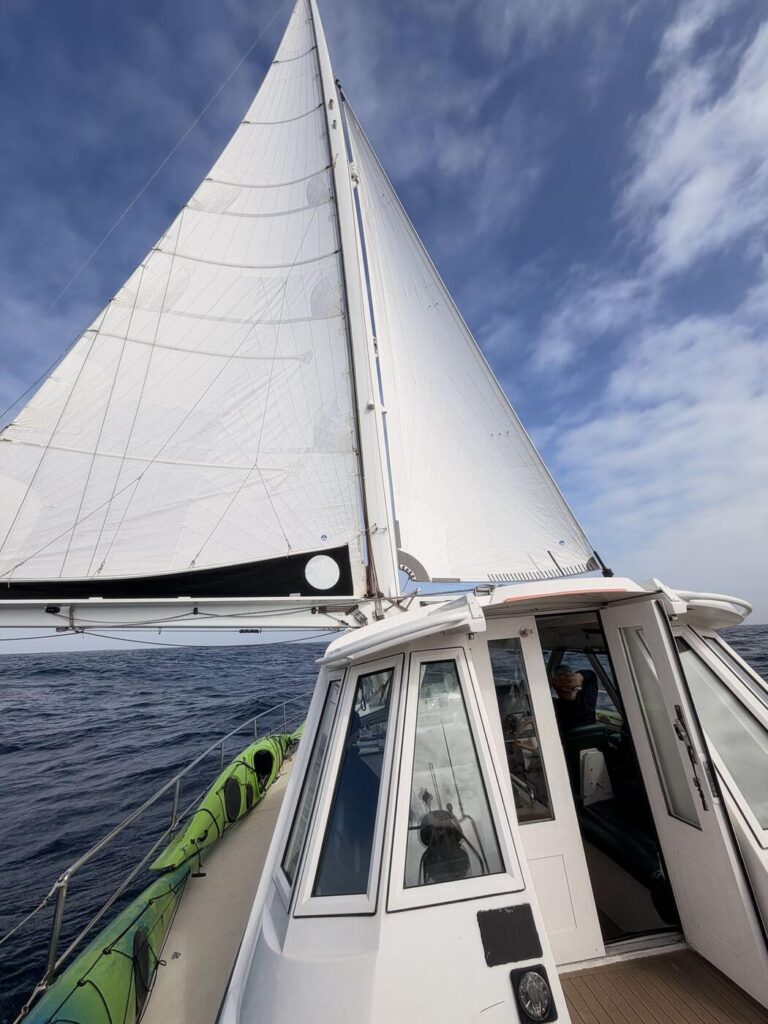
The wind was kind, twelve to eighteen knots and dead behind us, and the big AeroRig leaned into it and pulled us along. There is something good about a rig that does its work without complaint.
No one cooks for anyone on the passage, and no one needs to. The boat is a larder. Fruit hangs in nets and rolls in bins. Every day Chef bakes a loaf of bread, and the smell of it fills the cabin and gets into a man’s clothes and his thoughts. I may have to buy a bread maker when I get home. Beyond the refrigerator, food is stowed in every hollow the boat owns: under the seats and behind them, beneath the cabin floor, deep in the bow locker. There are months of it. A man who goes hungry here has only his own laziness to blame. I ate homemade granola with homemade yogurt and fruit, and it was as good a breakfast as I have ever had.
Nothing happened that day, and the nothing was a gift. There was the ocean, and the sky over it, and us between them, and the birds. Albatrosses and petrels and other birds of the South Atlantic wheeled around us as though we were the center of something. We kept the bow pointed at the South Shetlands and let the sea do as it pleased.
Late in my evening watch the rain began. Waves had started to come at us from the west, crossing the ones that came from behind, and I wondered where one ocean stops and the next begins. Maybe nowhere. Maybe the line is only on the charts.
Day 3: Halfway
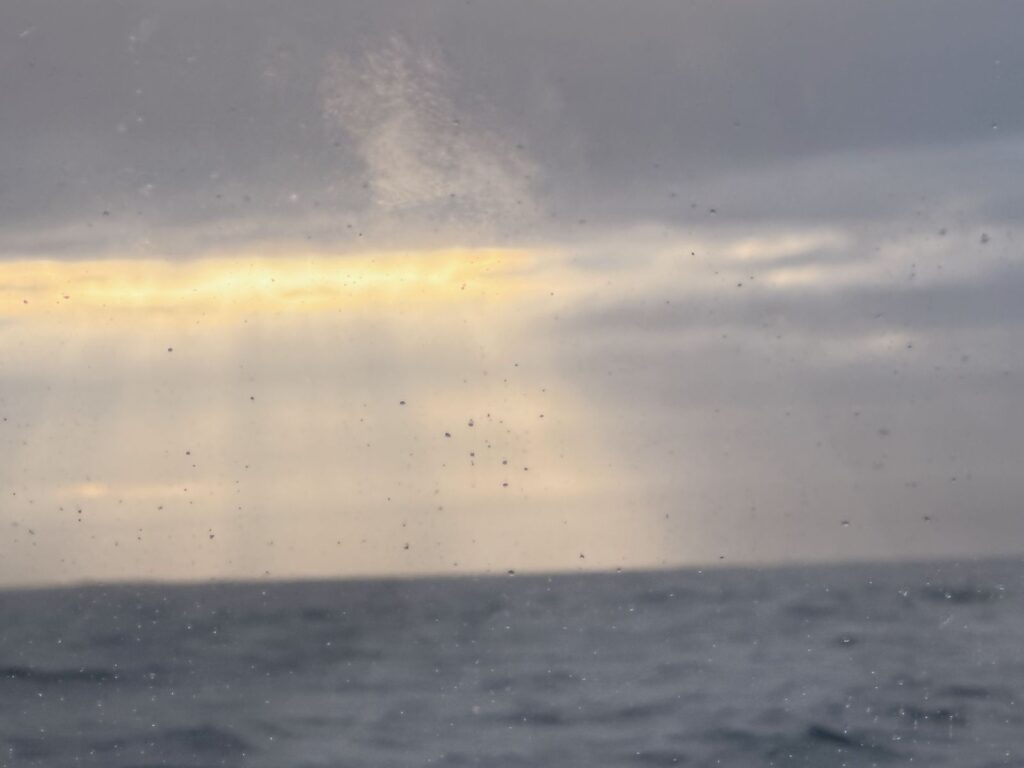
In the night I felt the boat come alive under me. She was sailing hard and spirited, and the watch before mine said she had touched nine knots, which is as fast as a hull like hers can go. By dawn the wind had gone soft. The sea lay flat and gray under a gray sky, and beneath it a long swell rolled in from the west, as if the Pacific were breathing. We had three hundred and fifty miles to go.
By one o’clock the clouds had broken and the wind had nearly died, but the swell kept coming, long and slow, lifting us and setting us down. The albatrosses stayed. I could watch them for hours, and I did. They do not seem to fly so much as rest on the air. They circle low enough that their wingtips touch the water, a long, unbroken line between sea and sky, and they never once beat their wings.
In all that time we saw no ship or boat, not a light at night or a smudge of smoke by day. Only IceBird and the birds and the water.
Toward evening the wind came back. We raised sail and ran south at a little over seven knots, rolling in the swells, which had eased to two meters. The internet out here comes through Starlink Priority, a thin and costly thread, and each of us gets five minutes of it a day. At first that felt like a hardship. Now it feels like a kind of mercy.
We left on Thursday, and on Saturday we passed the halfway mark. Monday morning, if the sea allows, we will see Antarctica. Somewhere ahead lie the currents of the Southern Ocean, and with them, maybe, the first ice.
Day 4: The Sixtieth Parallel
That night the boat rolled hard enough that the boom swung down and dragged in the sea. I woke a little after half past three, and it was already light. In these latitudes the night is getting thin and the day is taking over. When I had gone to bed at ten the sun was still up.
I made my granola and took the helm. At a quarter past four we crossed the sixtieth parallel. It means nothing to look at. The water is the same water. But a man feels it all the same, the way you feel crossing a state line on a long drive.
There are seven of us aboard. Sasha is the captain. Alex is first mate and cook, though he will only answer to Chef. Kayla is from Ushuaia, and this water is her backyard. Then there are the four of us passengers: one from France, a Kiwi who lives in Australia, one from Portland, Oregon, and me. Talk on the boat runs freely, but mostly in Russian and Spanish. Sasha and Chef keep up a low Russian between them, and Kayla laughs with our French shipmate in Spanish. I listen to the music of it and understand little, and I find I don’t mind being the odd man out.
By the end of my watch the Shetlands were fifty miles off. The Drake had been gentle with us, with soft winds and long rolling seas. It turned rough at night and calmed again for the morning watch, as if it knew who was at the wheel. For a first crossing I could ask for nothing better, ten out of ten. Maybe it was the patch behind my ear and maybe it was luck, but I was never seasick. Walking through the cabin is like walking through a fun house at a county fair. Cooking is an act of faith.
Day 5: Landfall at Greenwich Island
When I came up for my watch on the fifth morning, the islands were there.
They came out of a fog so thick it seemed solid. In the night, I learned, the crew had steered around an iceberg, a great pale shape that passed us in the dark.
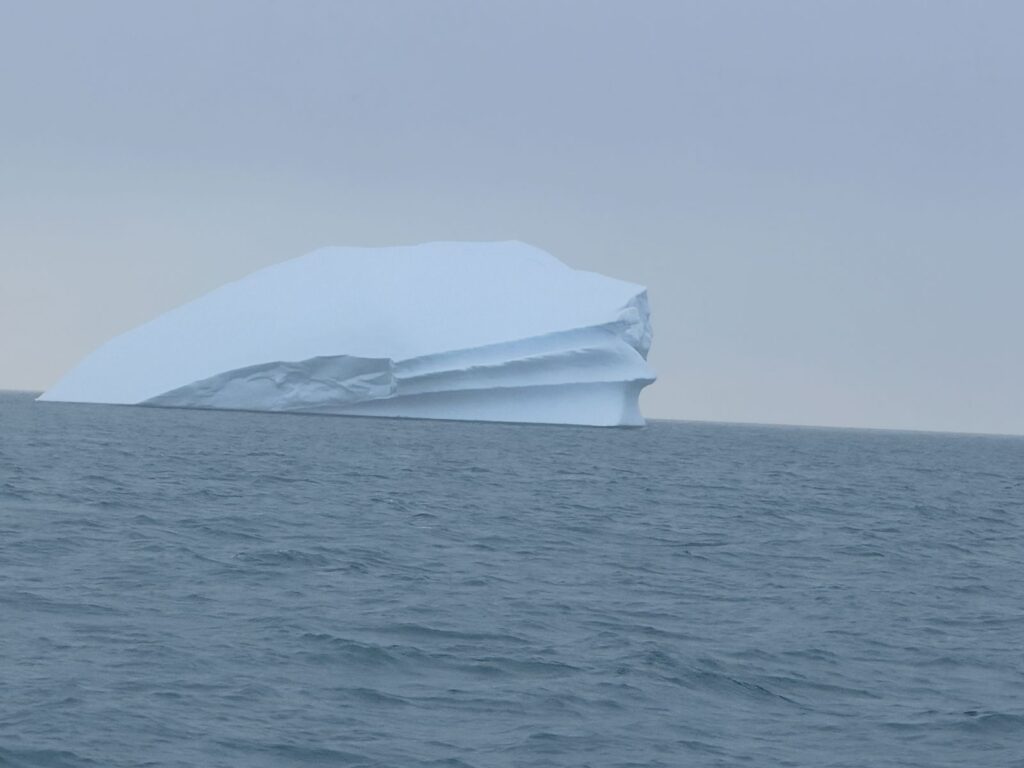
We crept along McFarlane Strait under power, slow and careful, and into a sheltered cove on Greenwich Island. The anchor went down. After four nights of broken sleep we all went below and slept like the dead.
Two hours later I woke, and the fog was gone. There was sunshine, and there were mountains, and there were penguins.
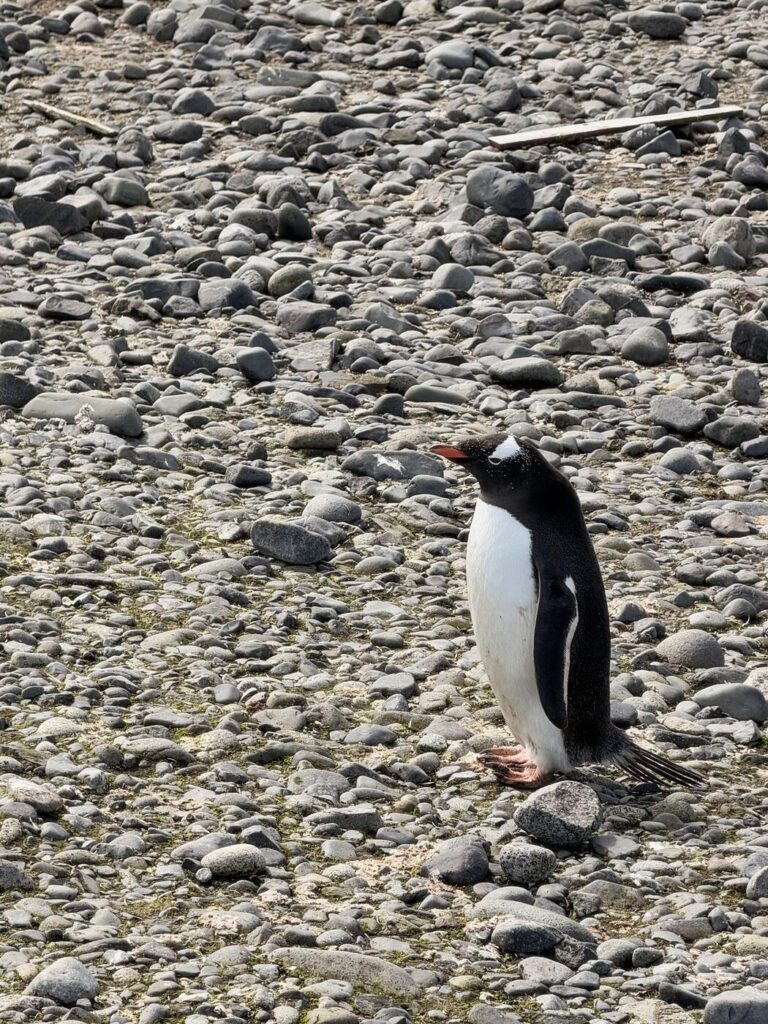
After a hot breakfast and an hour of cleaning, we went ashore, and I stood in the middle of a gentoo colony. They were nesting. They waddled around and past me and paid me no more mind than they would a rock. They have never learned to fear us, and I hope they never have to.
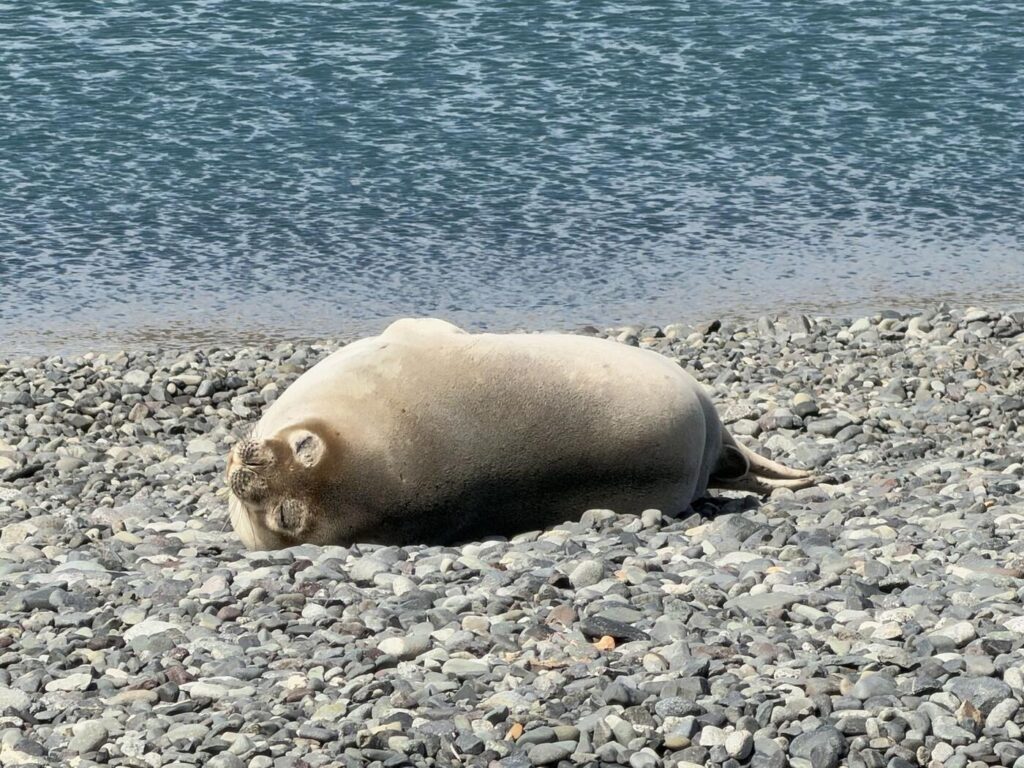
Down on the beach the elephant seals lay in the sun like great gray boulders that had learned to breathe. Now and then one would lift its heavy head, groan at the world, and settle back down. They had nowhere to be and no wish to go there.
Along the shore the albatrosses had gathered, the same great birds that had followed us across the Drake. They sat on the water and stood at the tideline in loose company, as if this were where they came to rest between long journeys. In the air they had been all grace. On the ground they were awkward and a little clumsy, like sailors just ashore.
And the brown skuas were always watching. They are the hard cases of this place, dark and quick, and they stand at the edge of the colony waiting for a parent to look away from its egg. Nature here is not gentle. It is honest, which is a different thing.
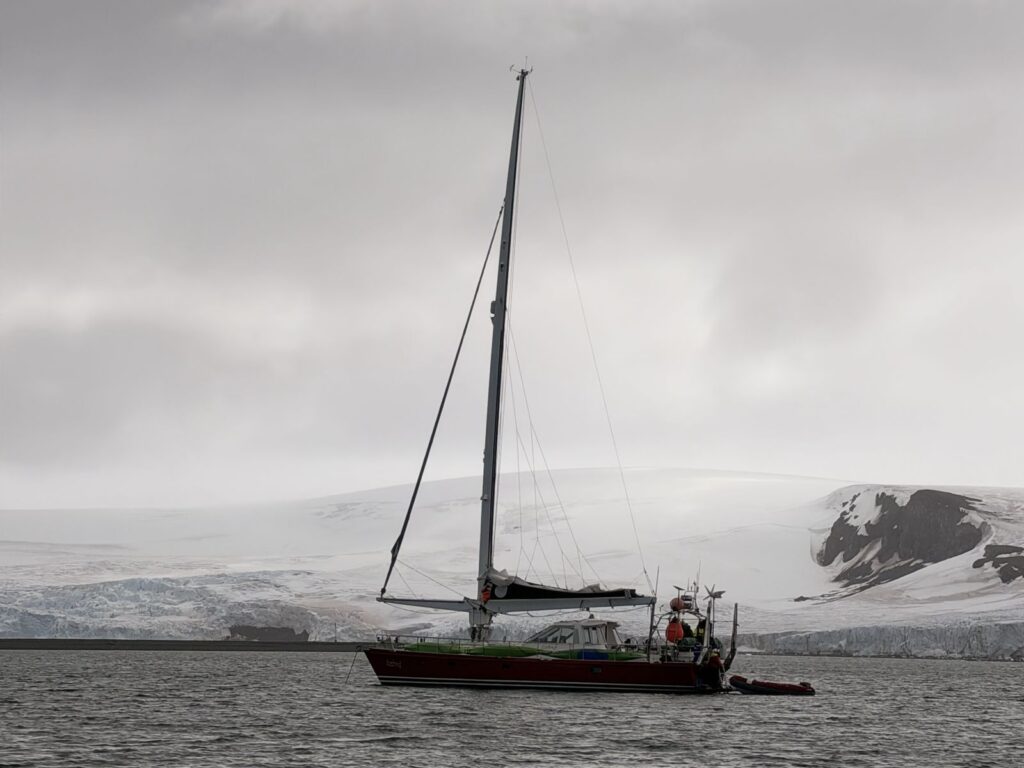
All around, the world was white. The mountains were not just capped with snow, they were buried in it, down to the water’s edge. Glaciers came down to the harbor where IceBird lay at anchor, and icebergs drifted out in the bay. Over all of it was the penguins’ sound, a constant chattering song that never stopped. I had expected the colony to stink, and it didn’t. It smelled clean and cold and alive.
I stood there a long time. A man does not often get to see a place as it was before he came, and I knew while I was standing in it that this is a place worth saving.
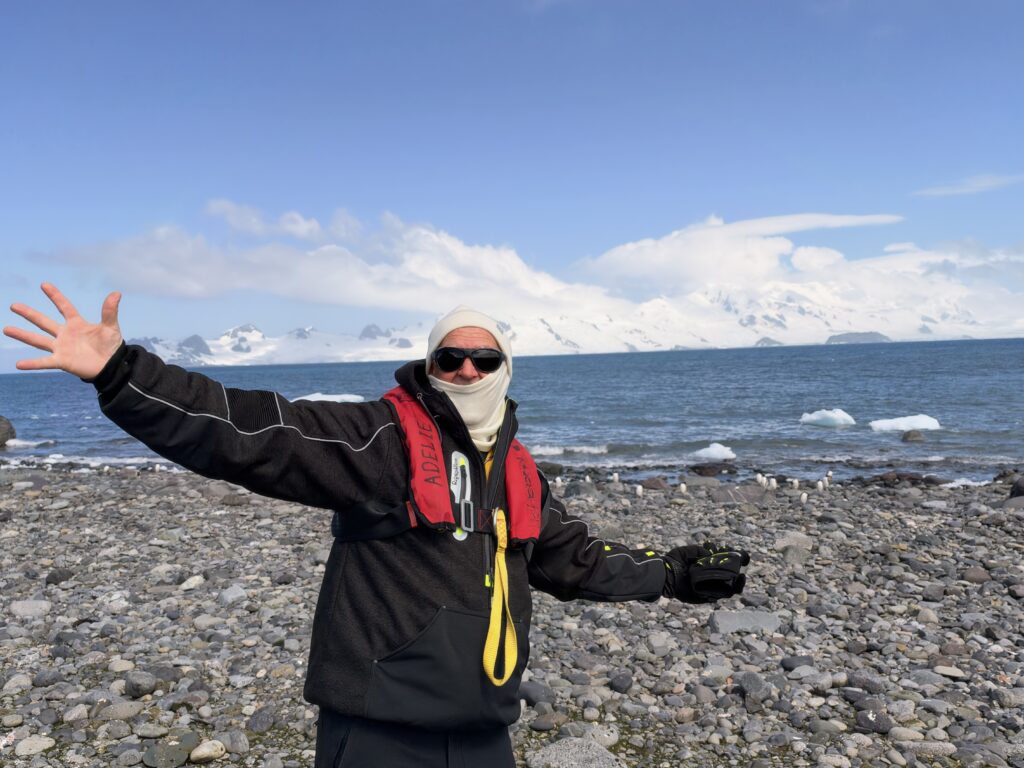
Then we went back to the boat, ate lunch, and turned to the chores. This is no cruise ship. Each of us is crew, and we take our turns at cleaning and stowing and readying the gear. There is honest satisfaction in that, in earning your place in a world like this one.