
By Larry Hall · June 2025 · Aboard SV Francesca
Same Hour, New Mission
5:30 a.m. — like clockwork.
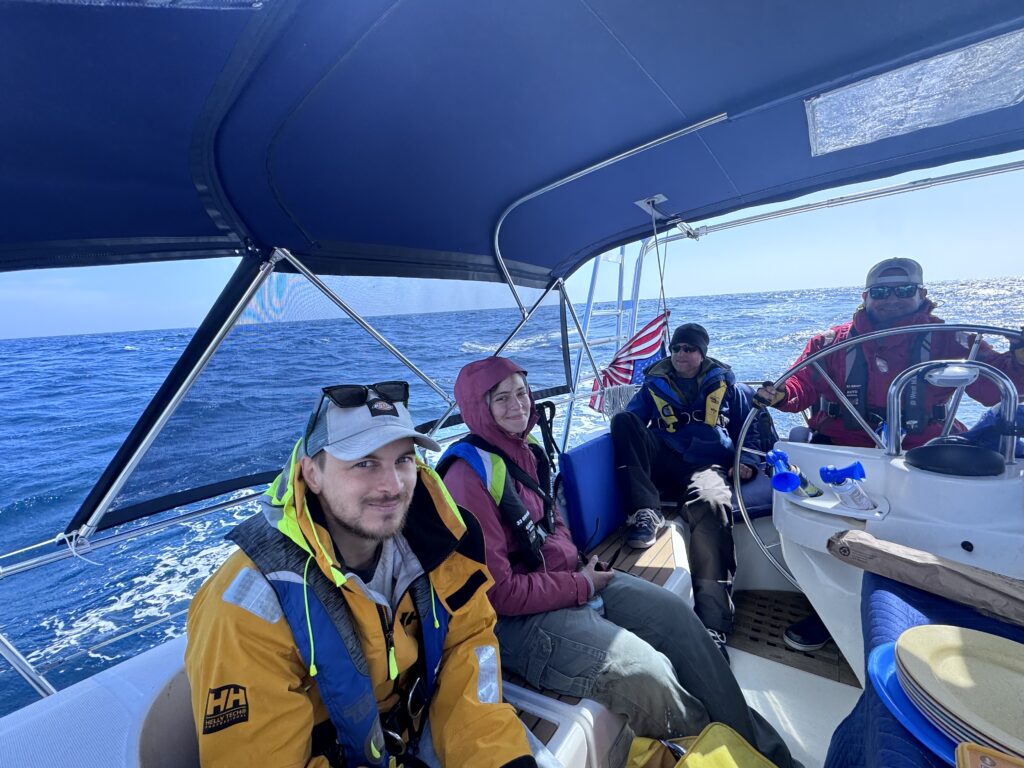
It’s the familiar start to every Farallon Patrol: early light, heavy duffels, and the quiet sense of shared purpose. For our fifth run, the crew consisted of myself as skipper, joined by John, Wyatt, and Dave—steady hands, all. From Point Blue Conservation Science, we welcomed Phoebe and Nick, bound for the island. On the return, we’d carry Hayden, Alara, and Mackenzie from the U.S. Fish and Wildlife Service back to San Francisco.
The mission was straightforward—personnel transport and gear delivery—but the sea had its own say.
June has a reputation out here. Less forgiving, more unpredictable. With strong wind forecasts on the radar, we secured gear tighter than usual and approached the day with quiet focus.
Preparing for Weather That Doesn’t Care
We weren’t looking to outpace the weather—we were looking to work with it, get the run done, and stay safe. That mindset shapes everything out there.
Estuary Traditions
Above: Breakfast underway. A warm galley tradition.
As we motored through the Oakland Estuary under low morning clouds, I served the usual tofu veggie scramble—hot, hearty, and now a tradition on board Francesca. It’s a small ritual that sets the tone: nourishing, familiar, and a bit of comfort before the sea shows her hand.
Chasing Whales and Holding Course
Once past the Golden Gate, the wind picked up. Swells weren’t unruly, but they kept us honest. We kept eyes on the horizon, hoping for wildlife. Whale sightings were sparse on this trip—elusive at best, likely pushed offshore by the wind and chop. Still, we caught a few blows and tails in the distance, always a thrill even when fleeting.
Island Landing & An Unforgettable Tour
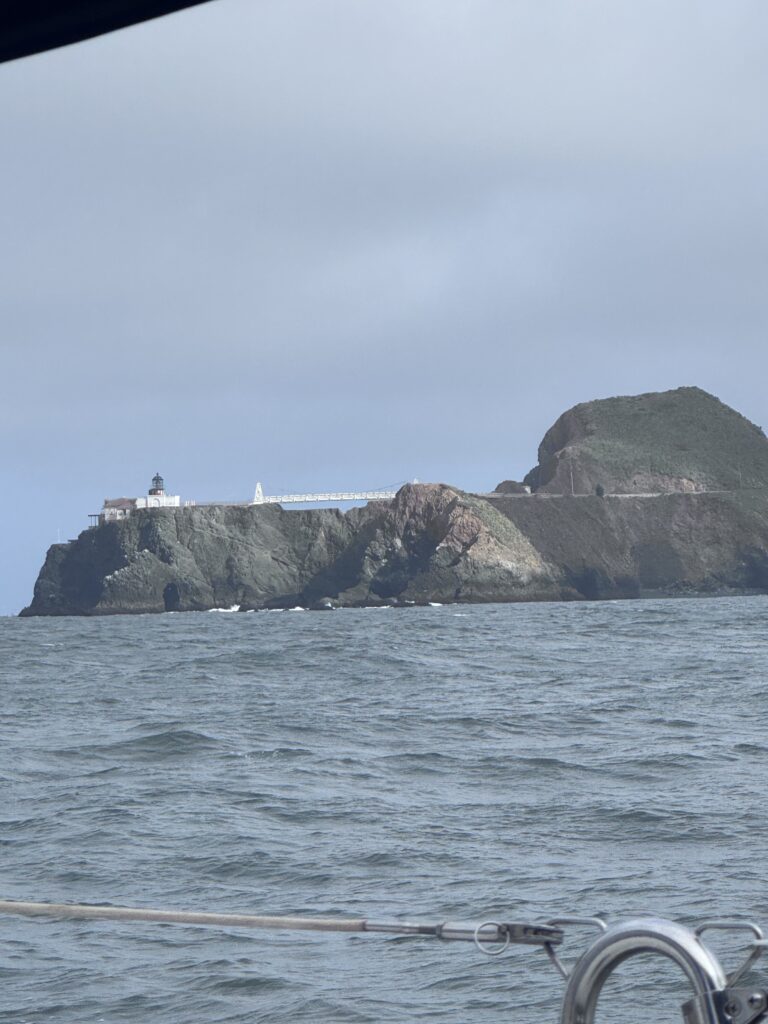
The approach to Southeast Farallon Island went smoothly. The mooring line was right where it should be, and conditions allowed for an efficient transfer. Phoebe and Nick disembarked with their gear, while Hayden, Alara, and Mackenzie waited to board for the return trip.
While John stayed aboard Francesca to mind the boat and help load gear, Dave, Wyatt, and I disembarked for a quick island tour—our first in several runs.
A World of Birds
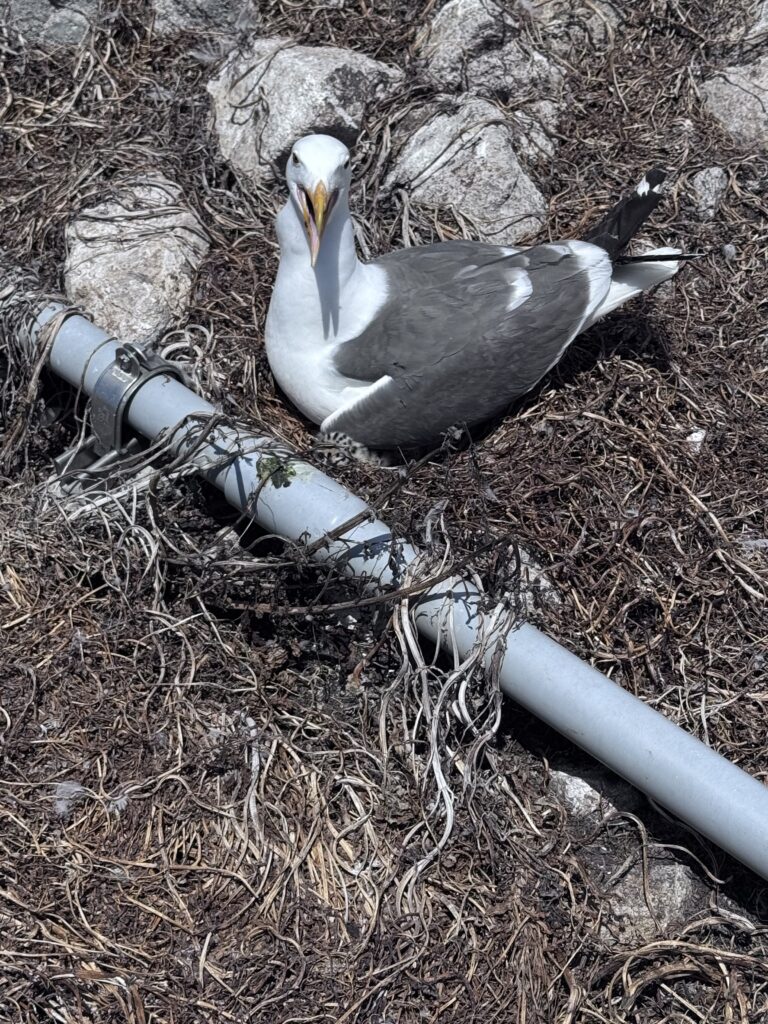
This visit was all about the birds. Gulls—between 25,000 to 30,000—blanketed nearly every inch of the island. Their nests were everywhere, and we were strictly warned not to step off the narrow paths, to avoid accidentally crushing unseen eggs.
The gulls were relentless—screeching, dive-bombing, defending their nests. Some eggs had already hatched, and we were told they might even drop “presents” on us. It was their island—we were merely tolerated observers.
In addition to Western Gulls, we saw:
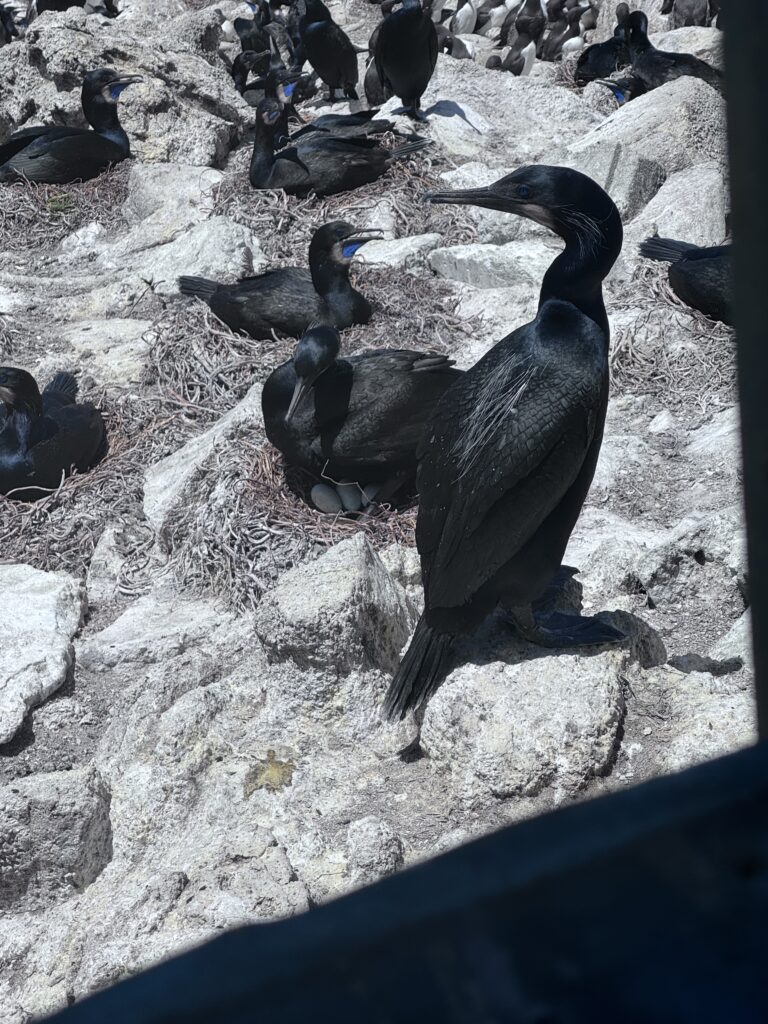
- Common Murres nesting in cliffs and crevices
- Cassin’s Auklets burrowed into nests or sheltered in nest boxes
- Brandt’s Cormorants colonizing the rocky cliffs
- Tufted Puffins, a real treat, occupying rocky cracks like feathered ghosts
We entered a blind to get a closer look at nesting activity. Because of the density of nesting birds, our tour was shorter than usual, but no less impressive.
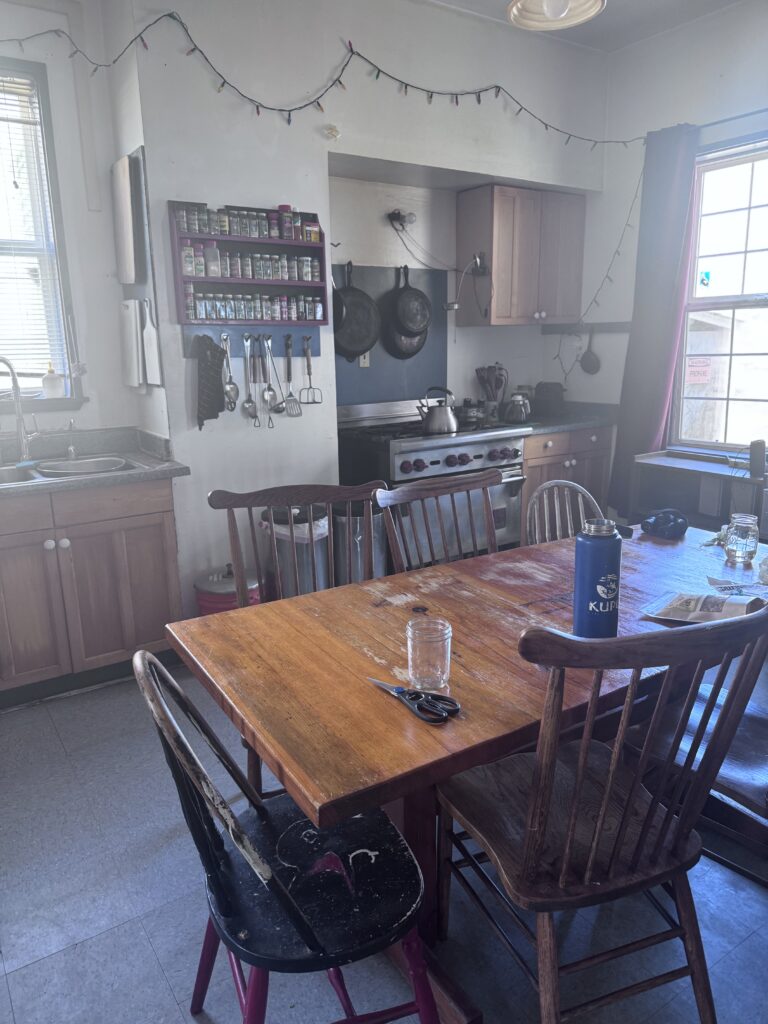
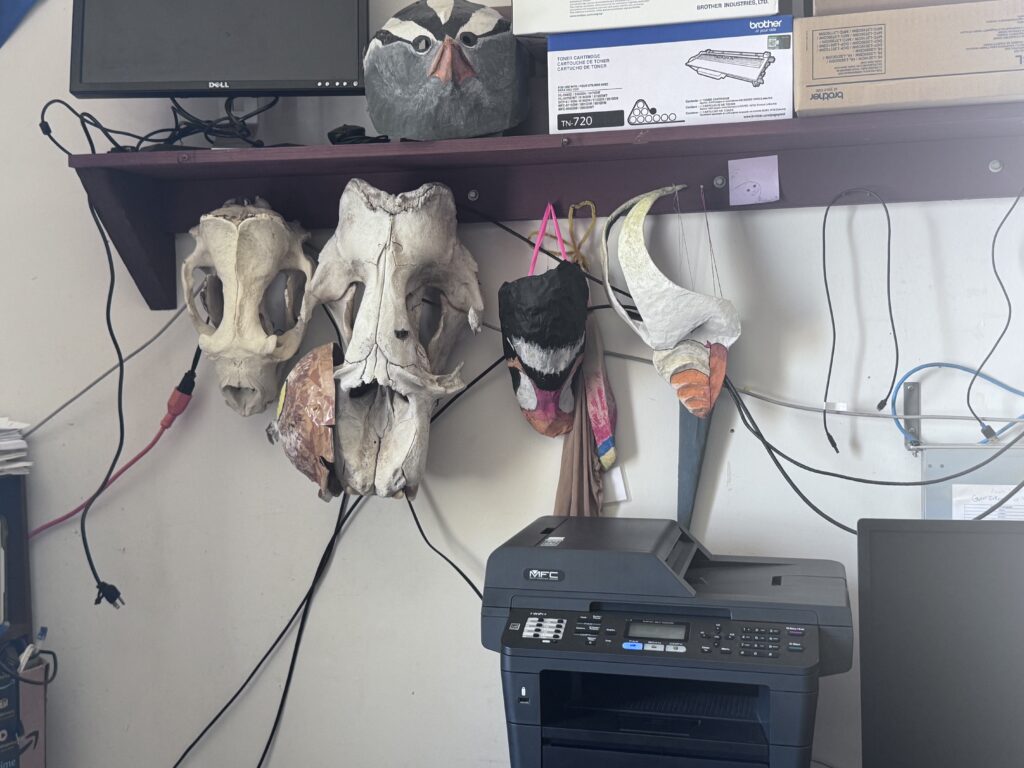
Our tour ended with a stop at the house where the scientists live and work. The structure is surprisingly cozy — there’s a communal kitchen with a long table, a shared office with several pinniped skulls mounted on the wall, and a sense of focused, purposeful calm. The team was unloading new provisions as we passed through — just another day in one of the wildest workplaces on earth.
Whales, Seals, and Circumnavigation and Homeward Bound
After returning via tender, we were greeted by whales offshore and the usual cast of marine residents—harbor seals, sea lions, and a few pelagic friends in the surf.
With the crew back aboard, we cast off and began our customary circumnavigation of the island—always worth doing. This time, we had company.
A “Round the Farallones” sailboat race was underway, so as we motored the perimeter, we watched sleek racing boatsslicing through open ocean swell, pushing hard to round the island and return to San Francisco. A beautiful convergence of science, sport, and seamanship.
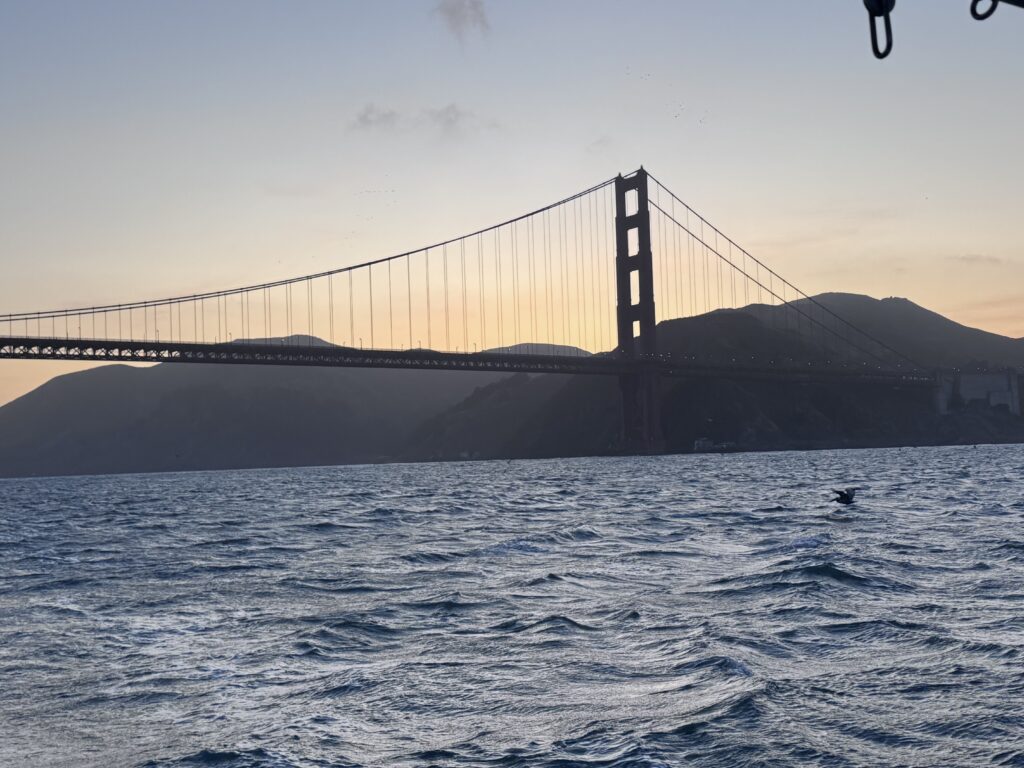
We turned eastward and began our return journey. As we passed beneath the Golden Gate Bridge, the sun began to set behind it—casting golden light across the water and silhouetting the towers in a fiery glow. After a day filled with birds, whales, and wind, it was the perfect ending.
Our day ended with a beautiful sunset behind the Golden Gate Bridge. A quiet exhale after the wild rhythms of the Farallones.
Reflections from the First Five Patrols
Each of the five patrols has brought something unique—some expected, some deeply surprising.
- Patrol No. 1 was about the pure excitement of visiting the Farallones for the first time—something I hadn’t even put on my bucket list. It was special. We saw seals, sea lions, elephant seals who had recently pupped and were caring for their young, plus murres, salamanders, and so much other life that’s adapted to this rugged place.
- Patrol No. 2 was an impromptu makeup run after a weather delay. I stayed aboard while the crew went ashore. While they explored the island, I had gray whales swimming around the boat, plus seals. I don’t know who had the better experience—me or them.
- Patrol No. 3 was my turn to land. The seal pups had been weaned and left to fend for themselves. We saw not only thriving wildlife but seals that hadn’t made it, along with the ever-present birds and sea life in flux.
- Patrol No. 4, I stayed aboard again while the crew toured the island. I was surrounded by humpback whales, blue whales, and the usual entourage of seals and soaring birds. A reminder that even when you don’t go ashore, you’re still deep in the wild.
- Patrol No. 5? That one was all about the birds—the density of life, the noise, the nesting, and the fierce parental defense of a next generation.
Why It Matters
Having now witnessed both winter and spring seasons on the Farallon Islands, one thing is crystal clear:
This is a place that must be preserved.
Every season reveals something different. Every visit offers new insight. The island is alive, and it’s changing constantly—and the scientists who study it are doing critical work that we all benefit from, whether we know it or not.
What can the scientists do there?
They monitor species that serve as indicators for the health of the ocean.
They track migrations, study climate shifts, and observe breeding success or collapse.
They identify emerging threats and protect fragile life cycles that begin and end on these rocks in the sea.
Their work is meticulous, and their presence is respectful.
Let’s keep supporting them. Let’s keep the Farallones wild.
— Larry
Skipper, SV Francesca
Farallon Patrol Volunteer
June 2025